
Alumni Outcomes | MS in Microbiology & Immunology
We are invested in preparing and equipping our students to pursue their aspirations, whether in advancing professionally or pursuing an advanced degree.
Office of Career Strategy & Professional Development
Biomedical Graduate Education’s career office supports students with one-on-one advising sessions, courses and workshops, and job boards.
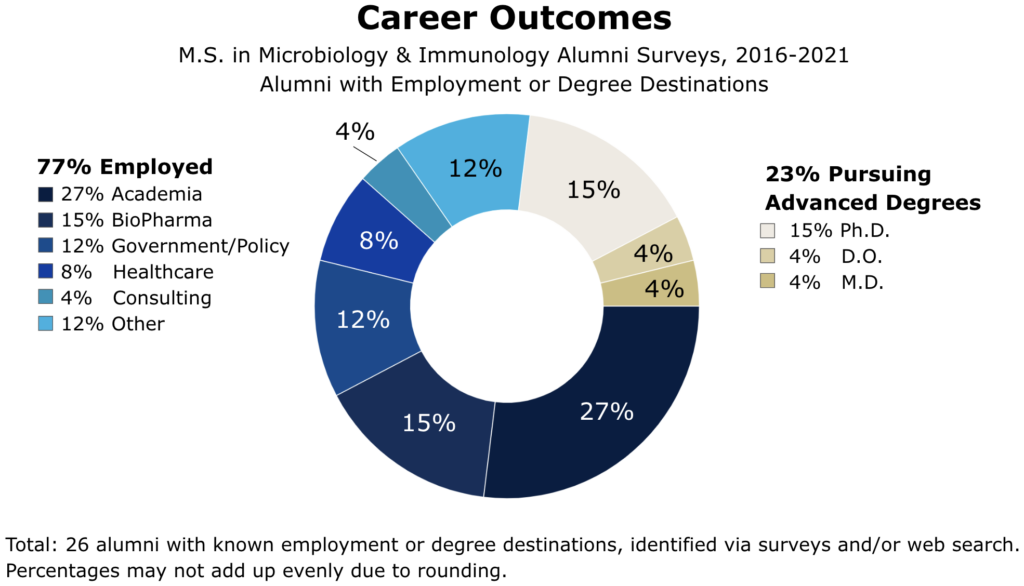
Where Do Our Alumni Work and Study?
Featured First Positions After Graduation
- Science and Research Analyst, Abt Associates
- Laboratory Technician, Charles River Laboratories
- Research Assistant, Georgetown University Medical Center
- Research Project Associate, Inova Schar Cancer Institute
- Associate Scientist II, Janssen Pharmaceutical Companies of Johnson & Johnson
- Research Associate, NantOmics
- Postbac Research Fellow, National Institute of Allergy and Infectious Diseases
- Senior Research Associate, Planet Pharma
Featured Advanced Degree Program Enrollment
- Ph.D., Georgetown University
- Ph.D., George Mason University
- Ph.D., Penn State College of Medicine
- Ph.D., University of Miami
- Ph.D., University of Florida
- D.O., A.T. Still University
- D.O., Rowan University School of Osteopathic Medicine
Alumni Testimonials

“The Microbiology and Immunology master’s program at Georgetown was a vital part of getting to where I am today. While the coursework was rigorous and interesting, I think the most important role the master’s program played in my journey was giving me access to faculty who are experts in their field, and the ability to become involved in the research they were performing. In addition, I found the faculty’s connections with the surrounding biomedical research community invaluable.”
— Suzie Stephenson, Ph.D., M.S.
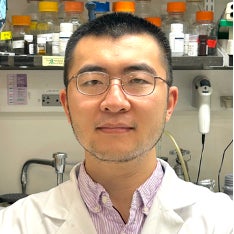
“My scientific journey in hepatitis B research began during my Master’s program in Microbiology and Immunology at Georgetown University in 2015. The department’s long history and renowned expertise in viral hepatitis provided an exceptional foundation for my training. I am deeply grateful for the mentorship I received from the faculties, which has proven to be invaluable. In particular, Drs. Stephan Menne and John Casey became important collaborators and key resources in advancing my research. I’m now a postdoctoral fellow at Rockefeller University, continuing to pursue my passion for hepatitis B research.”
— Xupeng Hong, Ph.D., M.S.
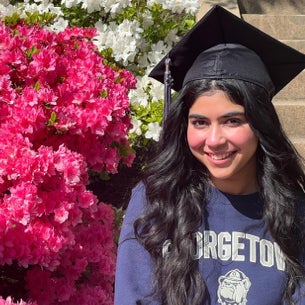
“My journey into virology began at Georgetown, where I completed my MS in Microbiology and Immunology. The courses in the program were intellectually thrilling and sparked a passion for studying viruses that continues to shape my work today. Working in Dr. John Casey’s lab was a formative experience; his thoughtful mentorship and emphasis on critical thinking deeply influenced how I approach science. The MICB program provided rigorous academic training and a supportive research environment. I am now a PhD candidate in Molecular and Cellular Biology at the University of Maryland, where I study the fidelity of HIV DNA synthesis to understand the factors that contribute to the virus’s genetic diversity. I’m proud to be a Georgetown alum and deeply grateful for the foundation the program gave me.”
— Urja Biswas, M.S.

“My interest in infectious disease led me towards Georgetown University for the Microbiology and Immunology master’s program, a program instrumental for my success as a scientific researcher. The rigorous MICB MS curriculum pushed me back into the academic environment, from clinical labs that I was accustomed to, and challenged me to apply what I had learned from industry to current topics being studied. The immunology courses, in particular, inspired me to ask more mechanistic questions about how immunological factors influence pathogenesis. MICB also brought in renowned speakers from the NIH and the FDA, offering professional insight into departments I never thought I would have connections with. While I had prior experience with essential laboratory techniques, Georgetown strengthened my understanding on how the techniques work and why they were being conducted. I am now a PhD student at the University of Pittsburgh, aiming to understand how the microbiome of the colon can promote the formation of tertiary lymphoid structures, to reduce colorectal cancer tumor burden. Georgetown gave me the tools to think critically, innovate boldly, and research with purpose—and I am forever proud to be a Hoya, advancing scientific knowledge forward!”
— Ethan Reever, M.S.

“My interest in zoonotic diseases began during the COVID-19 pandemic, which ultimately led me to pursue a master’s degree. The Master’s in Microbiology and Immunology (MICB) program at Georgetown University allowed me to explore this interest in depth and solidified my commitment to a career in the field of infectious diseases.
This program’s well-structured and interdisciplinary curriculum not only provided a strong foundation in microbiology and immunology, but also connected these core sciences to broader global health challenges. When I entered the program, I only had a general sense that I wanted to transition into a career related to infectious diseases. As I progressed through the coursework and engaged with faculty, my goals became more focused. Viewing the world through the lens of microbiology and immunology helped clarify my professional direction and inspired me to pursue a path that integrates science with public service.
After completing the program, I began working as a Biological Science Laboratory Technician at the National Veterinary Services Laboratory under the U.S. Department of Agriculture (USDA). I am now transferred to the National Bio- and Agro- Defense Facility where I contribute to efforts in animal health and biosecurity.
The education I received through the MICB program laid a strong scientific foundation and gave me the confidence to move forward with purpose. It was a truly life-changing experience that continues to guide my professional journey.”
— Eileen Yoon, M.S.
“Georgetown’s Microbiology and Immunology program provided exactly what I needed: a rigorous academic foundation and meaningful opportunities to grow as a researcher. From day one, the department was more than an academic setting, it was a genuine community.
The faculty went beyond teaching. They became mentors who shared their expertise, offered personal guidance, and invested in our development both in and out of the lab. Through research opportunities at Georgetown, I gained early exposure to both fundamental science and translational research, shaping my understanding of the broader scientific landscape.
What made the most lasting impact was the unwavering support. Professors were approachable, engaged, and committed to helping us succeed. Their encouragement challenged me to think critically, work independently, and take ownership of my scientific path. That confidence became the foundation for my work and continues to guide me in my current Ph.D. research.”
— Lulwah AlSalih, M.S.

“My journey to biomedical research has been shaped by a deepening interest in understanding disease at the molecular level and a desire to contribute meaningfully to science. That journey began in earnest when I read Microbe Hunters—a book that awakened my fascination with the invisible world of pathogens and the bold scientists who dedicated their lives to uncovering its secrets.
At Georgetown University, where I enrolled in the Microbiology and Immunology (MICB) Master’s program, I took my first real steps into that world. I trained in the laboratories of Dr. John Casey and Dr. Stephan Menne, where I developed essential molecular biology skills—RNA extraction, cDNA synthesis, qRT-PCR, electroporation—and began to approach scientific problems with rigor and creativity. Beyond benchwork, I gained broader insight through my work at the Global Health Institute and the Center for Global Health Science Security. I contributed to public health policy analysis during the COVID-19 pandemic. These projects expanded my view of biomedical science, reminding me that curiosity must also be coupled with compassion and global awareness. Georgetown gave me more than technical skills—it gave me a scientific identity. When I joined the PhD program in Biomedical Sciences at the University of Miami, I brought with me not only the skills I had developed, but also the scientific mindset, resilience, and sense of purpose that Georgetown University had helped me cultivate.
My training at Georgetown laid the foundation for my current research focus, equipping me with the critical thinking and methodological precision essential for success in biomedical sciences. The curiosity that once drove me to read about scientific pioneers now fuels my own experiments—and the sense of wonder remains.
I’m proud to have been part of a department that treated students like family, fostered excellence, and continued to support us beyond graduation. A place where “Hoya Saxa” was more than a motto; it was a lived experience.”
— Sayantika Ghosh, M.S.

My master’s training at Georgetown University was an important transition from my previous background in epidemiology to advanced immunology. Before this program, I had limited wet lab experience. The coursework at Georgetown was well organized and rigorous, providing me with a strong foundational knowledge. In addition, I conducted research in Dr. Stephan Menne’s lab. Under his mentorship, I was able to apply what I learned, engage in scientific discussions, and significantly strengthen my research skills. This experience prepared me for my advanced research training at the University of Miami, where I completed my Ph.D. Now, I will continue my research journey at UT Southwestern Medical Center as a postdoctoral fellow in immunology and cancer therapy.
— Xuebing Leng, Ph.D., MPH, M.S.